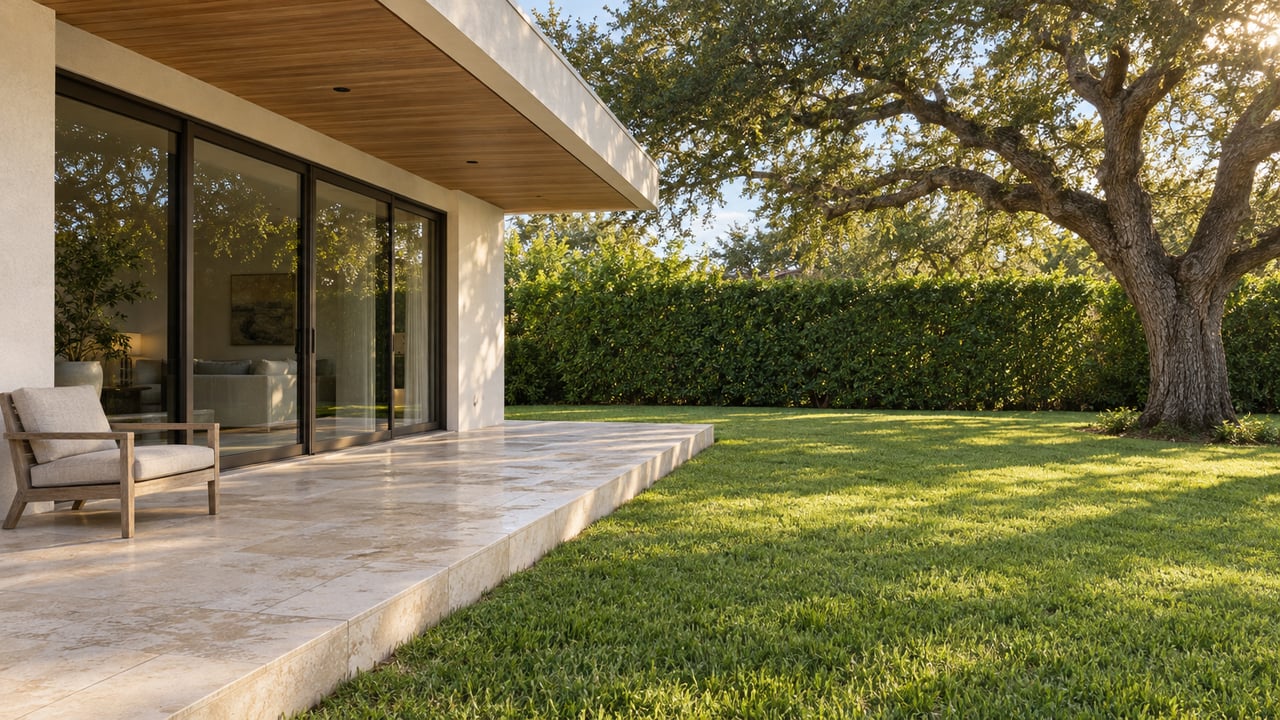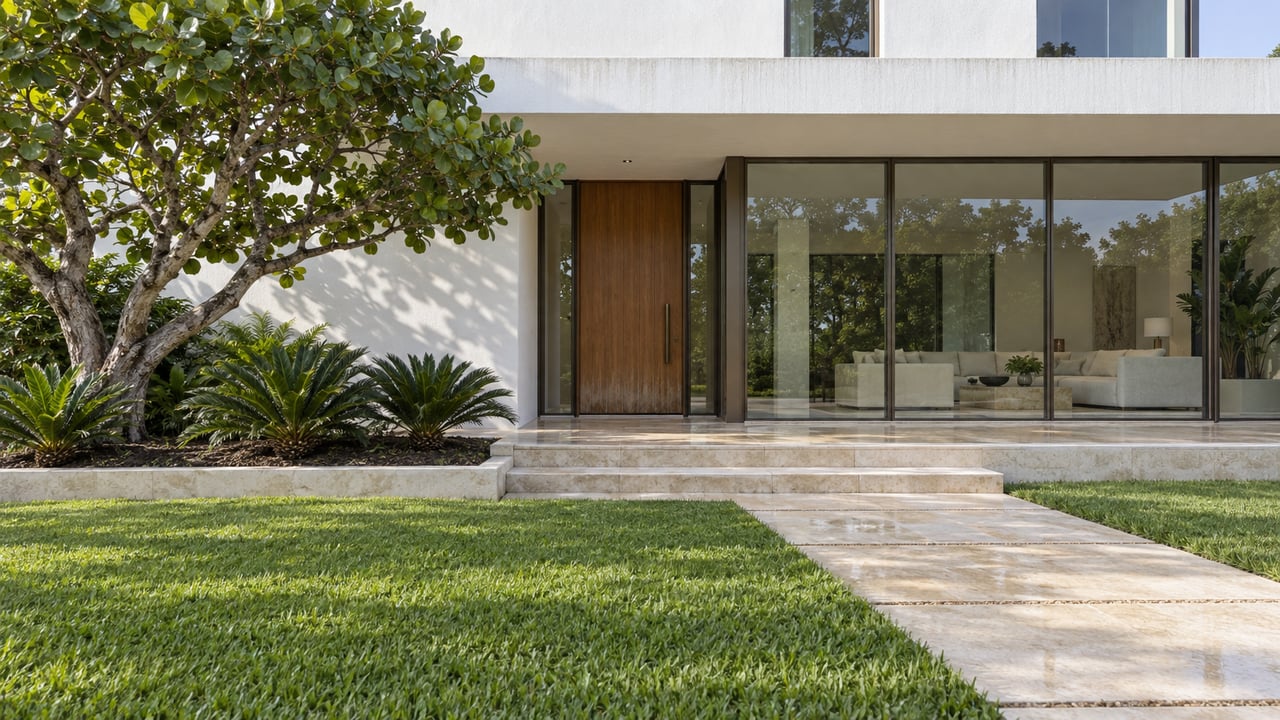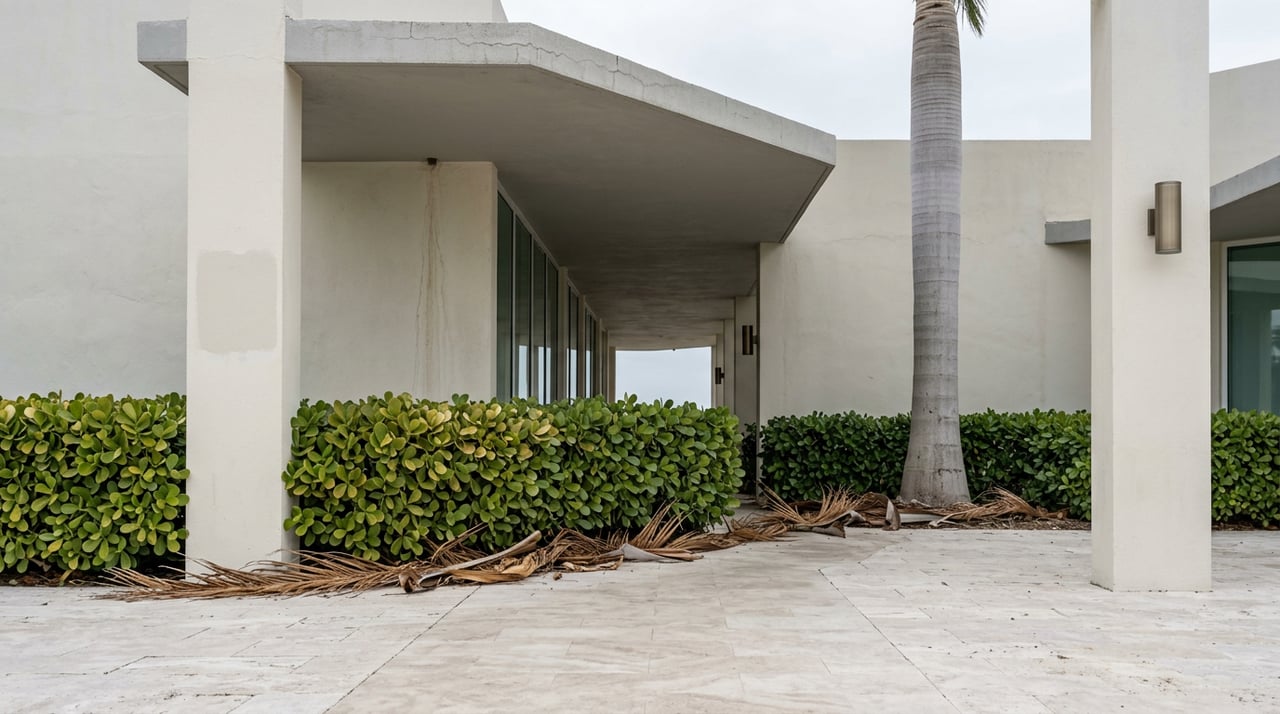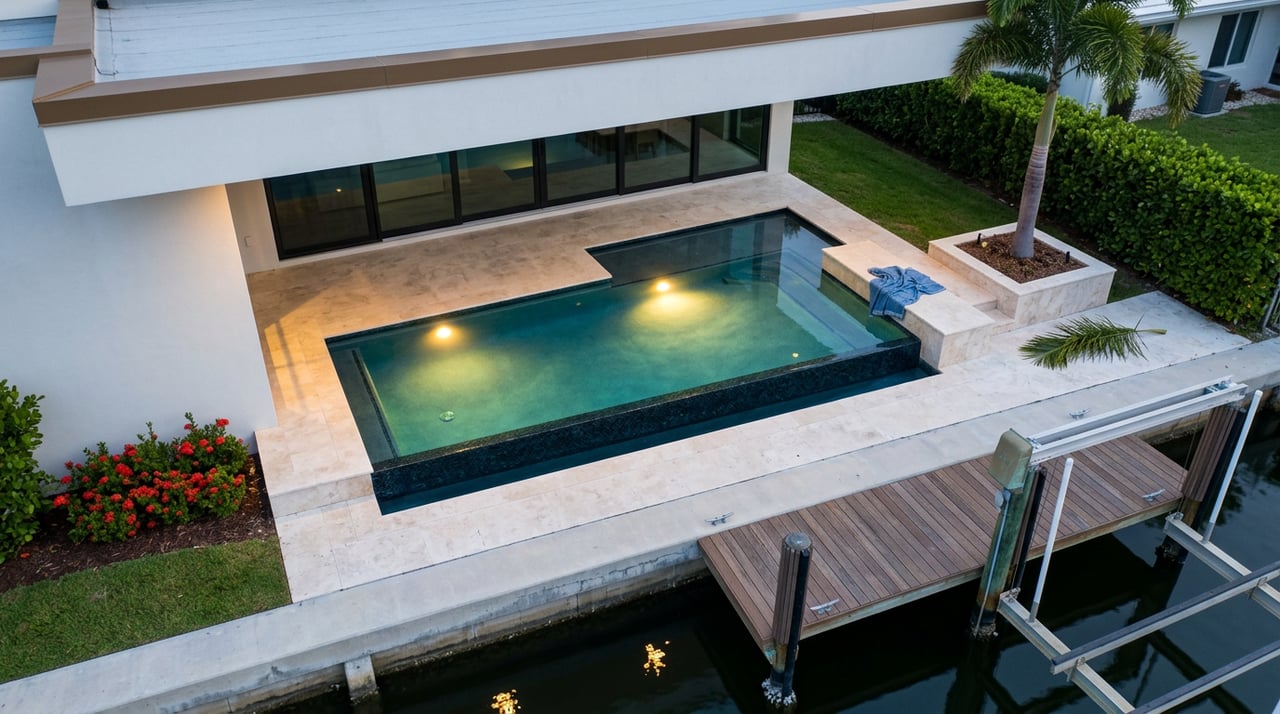
Two listings come up side by side in a Fort Lauderdale waterfront search. Same square footage, give or take fifty feet. Same finish level, same year of renovation, same dock out back. The price per square foot on one is roughly what you'd expect for the neighborhood. The price per square foot on the other is nearly double. Nothing in the photos explains the gap.
The explanation is usually a bridge neither buyer has thought to ask about.
Fort Lauderdale earned its nickname, Venice of America, honestly. The city's waterways link homes to the Intracoastal, the New River, and eventually the Atlantic, but that link runs through a network of drawbridges and fixed spans that most buyers never think to check until a boat is already in the water and stuck on the wrong side of one. That single fact, more than square footage, more than finishes, more than the listing photos, is what actually splits Fort Lauderdale's waterfront market into tiers that a simple price-per-foot comparison cannot see.
The Median You've Already Seen Doesn't Describe This Market
If you've spent any time on portal searches, you've seen Fort Lauderdale's citywide median sale price hovering around $580,000, a figure Redfin reported for the three months ending June 2026 and one Houzeo's July 2026 data confirmed almost exactly. Citywide price per square foot in that same window was $397, per Redfin, up 3.1 percent year over year.
That number describes the city. It does not describe the water.
A market watch report covering the back half of 2025 put the median sale price for a Fort Lauderdale ocean access home at $2.15 million over the trailing six months, and $2.3 million for the full year, a jump of 17.9 percent year over year. Price per square foot on those same homes ran $869, up 9.2 percent. Waterfront in this city isn't a premium tier layered evenly on top of the citywide number. It's a separate market with its own supply, its own buyer pool, and its own pricing logic, one built almost entirely around a question the median never asks: can a boat get from this dock to open water without hitting something it can't clear?
What Actually Splits a Waterfront Price
Ask a longtime Fort Lauderdale boater what matters and you'll hear the same three words before you hear anything about kitchens: bridge, depth, exposure.
Most fixed bridges spanning the city's canals clear somewhere between 14 and 17 feet above mean high water, with many quoted right around 15 feet. That number rules out most sailboats and any flybridge motor yacht with real air draft. It does not rule out a center console or a smaller cruiser, which is exactly why fixed-bridge canals still sell, just at a different price than the water on the other side of that same bridge.
The Las Olas Boulevard bascule bridge, the drawbridge tourists photograph from the seawall downtown, clears 31 feet and opens on a published schedule, on the quarter hour and three-quarter hour. That's enough for most recreational vessels heading toward the Intracoastal. The real bottleneck for boats moving up the New River sits somewhere less obvious: the FEC railroad bridge near the Broward Center for the Performing Arts, a span that closes down to just 4 to 5 feet of clearance and is controlled by the rail operator, not the city. It opens only when a train isn't coming, which means it opens on nobody's predictable schedule at all. A homeowner upriver of that bridge with a boat tall enough to need it cleared is negotiating with a freight timetable every time they want to reach the ocean.
None of this shows up in a listing sheet. It shows up in resale, when the buyer pool for a home behind a low fixed bridge turns out to be a fraction of the pool for an identical home with unobstructed, no-fixed-bridge access to blue water.
| Bridge or Span | Type | Typical Clearance | What It Means for a Buyer |
|---|---|---|---|
| Fixed canal bridges (citywide) | Fixed | About 14 to 17 ft at mean high water | Rules out most sailboats and tall flybridge yachts |
| Las Olas Boulevard | Bascule, scheduled opening | 31 ft when raised | Opens on the quarter and three-quarter hour, accommodates most recreational vessels |
| FEC railroad bridge (New River) | Movable, rail-controlled | About 4 to 5 ft closed | Opens only between trains, the least predictable crossing in the city |
Where the Tiers Actually Live
Walk through Fort Lauderdale's named waterfront neighborhoods and the bridge-and-depth logic maps almost perfectly onto price.
Rio Vista, the historic neighborhood south of the New River, is where no-fixed-bridge deep water and central location meet. Redfin reported a median sale price near $2.6 million there as of February 2026, while Realtor.com listed a median list price closer to $3.0 million the same month, with 47 homes on the market and a median 58 days to sell. Many of the deepwater parcels along the river and its canals reach the Atlantic without a single fixed span in the way, which is the entire reason the neighborhood commands what it does.
Las Olas Isles, the finger-island canal system just east of downtown, runs a wider band as of mid-2026, roughly $1.8 million for a dated three-bedroom up to $8 million or more for newer construction with a pool and true deep-water dockage. The isles were built for boat access from the start, and the pricing still reflects it.
Harbor Beach sits at the top of the ladder, with entry points as of spring 2026 routinely exceeding $3 million, driven by private beach access and dockage rated for mega-yachts rather than weekend runabouts. Coral Ridge, by contrast, offers a broader range as of mid-2026, roughly $1.2 million to $5 million for single-family waterfront homes, with larger lots and frequently 100-foot frontages that give buyers more flexibility on dock configuration even where bridge access is more mixed.
Sailboat Bend, tucked against Rio Vista along the New River, remains the most accessible entry point into genuine Fort Lauderdale waterfront ownership, with single-family river-front homes running $700,000 to $3 million. It's real dockage and real boating access, just without the no-fixed-bridge scarcity premium that Rio Vista and Las Olas Isles command.
The pattern holds across all of them. The neighborhood name matters less than the specific parcel's route to the ocean, which is why two homes on the same street, even in the same prestige neighborhood, can price hundreds of thousands of dollars apart once one buyer's boat clears the local bridge and another's doesn't.
A Bridge Project and a Schedule Change
This isn't a static system. The East Las Olas Boulevard Bridge Rehabilitation Project, listed in FDOT's Broward County construction report for August 2026, is currently underway, replacing the bridge deck, repainting structural steel, replacing electrical components, and swapping out the mechanical span locks and marine fenders that keep the movable deck aligned. Marine construction on a working bascule bridge is not invisible to nearby boaters, and buyers evaluating a Las Olas Isles or downtown-adjacent dock right now should ask their agent whether the current phase of that work affects opening reliability during their expected ownership window.
Separately, the SE 17th Street Bridge, the span carrying traffic to Port Everglades and the beach, made a schedule change permanent as of February 2026, adjusting weekday opening times to ease peak traffic congestion while preserving marine access for the large vessels that rely on that route to reach the inlet. For a buyer specifically weighing dockage near that corridor, the practical opening pattern is worth confirming directly rather than assuming it matches whatever the boat was told last season.
The Second Number That Shows Up After Inspection
Bridge and depth explain most of the spread in asking price. Seawall condition explains a lot of what happens to that price after an inspection.
According to The National Law Review, Fort Lauderdale requires new and substantially repaired seawalls to meet a minimum top elevation of 5.0 feet NAVD88, a stricter local standard than the 4.0 feet NAVD88 minimum most other Broward cities apply under the county's tidal flood barrier policy. According to Breezy Permits, the trigger isn't a calendar date years out. It's the day a repair crosses 50 percent of the wall's length or 50 percent of its cost, at which point the entire structure has to come up to the current standard rather than just the damaged section. Since December 31, 2020, Broward sellers in tidally influenced areas have been required to disclose in writing that a property may be subject to these minimum elevation standards, which means the paperwork is already built to surface this before closing. It rarely gets read as closely as the price sheet.
For a buyer comparing two otherwise similar docks, the seawall's current elevation and repair history belong in the same conversation as the bridge clearance and the water depth, not as an afterthought once financing is already underway.
Frequently Asked Questions
Is price per square foot ever a useful comparison for Fort Lauderdale waterfront homes? It works reasonably well within a single, well-defined tier, comparing two no-fixed-bridge Rio Vista homes against each other, for instance. It breaks down the moment you compare across tiers, because a fixed bridge or a shallow canal removes an entire category of buyer from the pool regardless of how the interior finishes compare.
What counts as a fixed bridge versus a bascule bridge? A fixed bridge has a set, unchanging clearance height with no moving parts. A bascule bridge is a movable drawbridge that opens on a schedule or on request, which is why bascule crossings like Las Olas Boulevard accommodate far taller vessels than any nearby fixed span.
Should every waterfront offer include a marine survey before closing? For any property where boating access is a primary reason for the purchase, verifying dock depth at low tide, the exact route to open water, and the current seawall elevation before writing an offer avoids the most common surprise in this market, discovering after closing that the boat and the dock were never actually compatible.
Bridge clearance, water depth, and seawall elevation rarely show up in a listing description, but they are exactly the details that separate a waterfront property that performs the way an owner expects from one that quietly limits its own resale pool. The Schirripa Group works these details before a showing, not after an accepted offer, drawing on founder Timothy Schirripa's background across brokerage, development, and investment advisory to read a Fort Lauderdale waterfront deal the way the water itself reads it. If you're comparing docks, bridges, and seawalls rather than just square footage, reach out and let's walk the specifics together.
This article is general information, not legal, tax or financial advice. Consult a qualified professional about your situation.